INTRODUCING (Q&A) / Etching Room 1
‘Vampire’
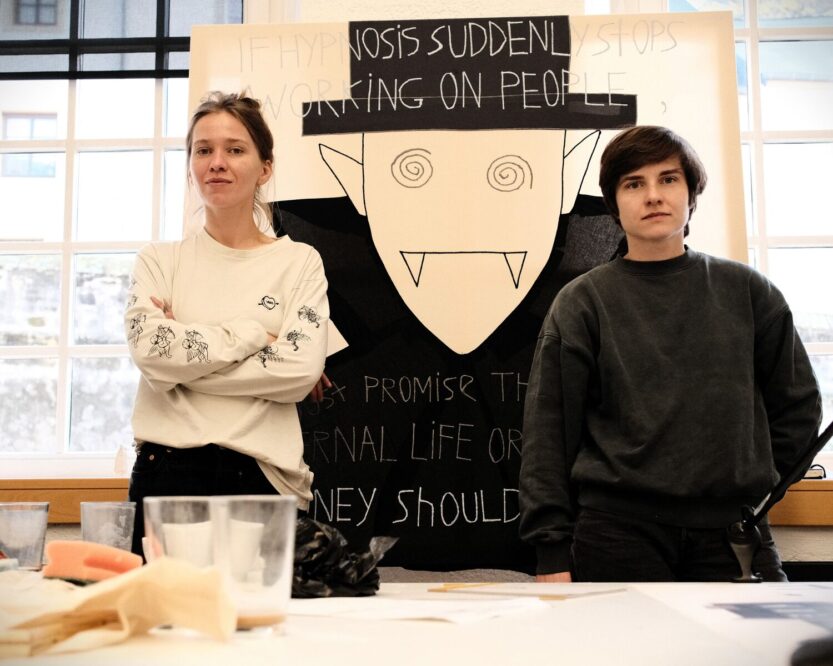


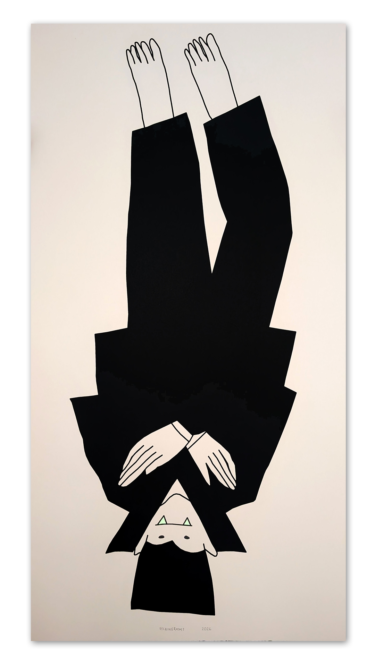
Vampires have been sneaking into our drawings almost from the very beginning, together with all kinds of other strange and unexpected characters. Some of them eventually became almost independent characters, with their own stories and, maybe, even their own little missions in our practice.
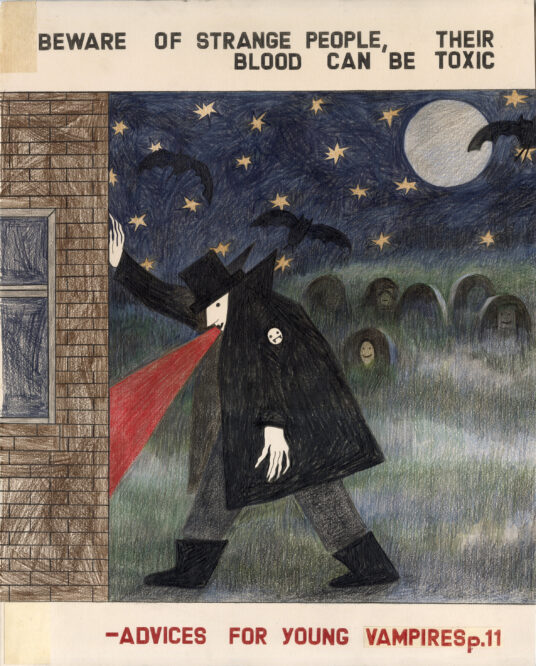
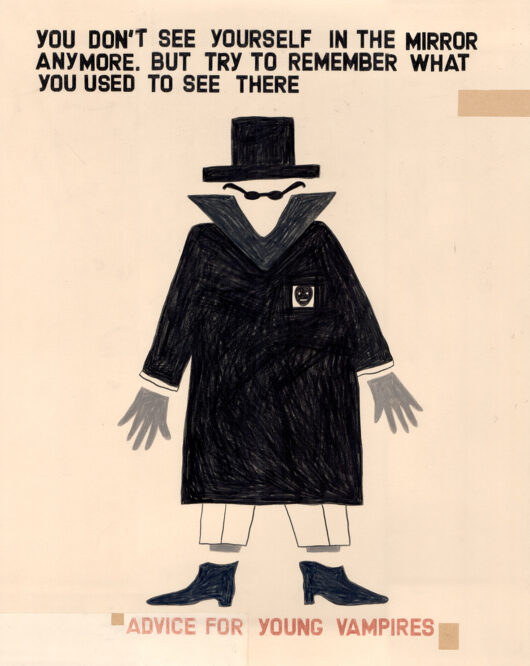
The vampire really came into its own when we started working on Advice for Vampires, a book we are currently developing. It’s a mix of quite serious questions and everyday problems, but looked at through a lighter, slightly absurd and fantastical world. You could call it a kind of light therapy for vampires — and maybe for humans too.
The book is organised into chapters like Social Life, Self-Calm and Harmony, Love and Family, and so on. Basically, advice for all those situations when you have been alive for several hundred years and still have no idea what you’re doing.
Do you have a particular audience for your work?
Not really. We don’t make work with a specific audience in mind. We like when different people can find their own way into it — through an image, a character, a story or just something that makes them smile.
Do you intentionally explore a humorous side to your work?
Yes, definitely. Humour has always been an important part of our practice. We like using something funny, absurd or a bit ridiculous to talk about more serious things. Sometimes it’s simply our way of making difficult topics a little easier to approach.